REVIEW · CHICHEN ITZA
Chichen Itza: Tour with Expert Guide without lines!
Book on Viator →Operated by Experinciasyucatan · Bookable on Viator
Chichén Itzá is a puzzle made of stone. This 90-minute tour gives you a tight, guided walk through the most emblematic spots, with story-first explanations and photo help that keeps things moving. I like that the visit is structured around the ruins’ big moments, not a random shuffle.
I especially like the focus on what you can actually notice on-site: El Castillo’s astronomy and acoustics, the Temple of the Warriors’ square pillar engravings, and the Gran Juego de Pelota’s sound. The pacing is short enough that you stay sharp, and the guide can keep the whole place making sense while you’re still standing in it.
One consideration: the headline tour price does not include the Chichén Itzá entrance fee for foreign tickets (MX$696 per person), and parking is extra (MX$100 per booking). Also, you’ll want to time your arrival well so you’re not hunting for everything while the morning crowd ramps up.
In This Review
- Key things to know before you go
- 90 minutes at Chichén Itzá: how this tour keeps it focused
- Entering smoothly: tickets, “no lines” expectations, and parking math
- Stop 1: El Castillo and the astronomy you can see in place
- Stop 2: Temple of the Warriors and the square-pillars story
- Stop 3: Gran Juego de Pelota and why the acoustics matter
- Stop 4: Sacred Cenote and the Maya world-underworld connection
- Guides who make it click: Russell, Omar, and the multimedia edge
- Price and value: what you pay for, what you’ll still need to budget
- Practical comfort at the ruins: photos, lockers, service animals, and where it ends
- Who should book this tour, and who might want something else
- Should you book this Chichén Itzá expert guide tour?
- FAQ
- How long is the Chichén Itzá tour?
- Is the tour offered in English?
- Where do I redeem the ticket / meet the guide?
- What ruins are included in the itinerary?
- Is the entrance fee included in the tour price?
- How big is the group?
- What’s included besides the guide?
- Is cancellation free?
- Are service animals allowed?
Key things to know before you go
- A 90-minute route that hits the main ruins in a single loop (El Castillo to Sacred Cenote)
- Small groups (up to 15), which makes questions easier and photos simpler
- English expert guidance, with multimedia support mentioned by guide fans
- Photo help and right-spot posing, especially when you’re working around viewpoints
- Included practical extras like lockers and photos during the tour
- Entrance fee is separate for foreign visitors, so your true cost is tour price plus site entry
90 minutes at Chichén Itzá: how this tour keeps it focused
This experience is built for short attention spans and hot days. You’re looking at about 1 hour 30 minutes total, with four stops that match the ruins’ biggest “wow” zones. The route is simple: you meet up, you visit, and the activity ends back at the meeting point.
The group is capped at 15 travelers, which is a sweet spot. You won’t feel lost in a crowd, and your guide can keep you oriented while you’re moving between landmarks. It’s also offered in English, so you’re not stuck with guesswork when the guide starts explaining Maya design and purpose.
Your guide also includes a few small perks that actually matter in practice: photos during the tour and lockers. If you’re carrying a bag, that’s a real convenience when you want to move fast and not keep setting things down.
Other skip-the-line chichen itza tours at Chichen Itza & the Yucatán

Entering smoothly: tickets, “no lines” expectations, and parking math

The tour name says without lines, but here’s the honest way to think about it: booking ahead and having an organized check-in generally reduces your waiting. In practice, one of the biggest factors is when you arrive. If you’re driving yourself, arriving earlier can change the whole experience.
If you plan to park, there’s a national park parking lot option. One practical tip from a guide fan: if you arrive around 8:15am (with a reminder that Cancún/Tulum are an hour ahead of Chichén Itzá), parking in the national park lot for 100 pesos can save time versus the chaos farther around. The same tip also notes you might see more people offering parking and guide options before you reach that main lot.
Now let’s talk money, because Chichén Itzá pricing can look confusing at first:
- The tour price shown is $25.26 per person.
- The Chichén Itzá entrance fee for foreign visitors is listed as MX$696 per person and is not included.
- A national ticket with Mexican ID (INE) is listed as MX$315 per booking.
- Parking is MX$100 per booking and is not included.
So your “all-in” plan is basically: tour price + the right site ticket for your status + parking if you drive. Once you do that math once, the day feels less stressful.
Stop 1: El Castillo and the astronomy you can see in place
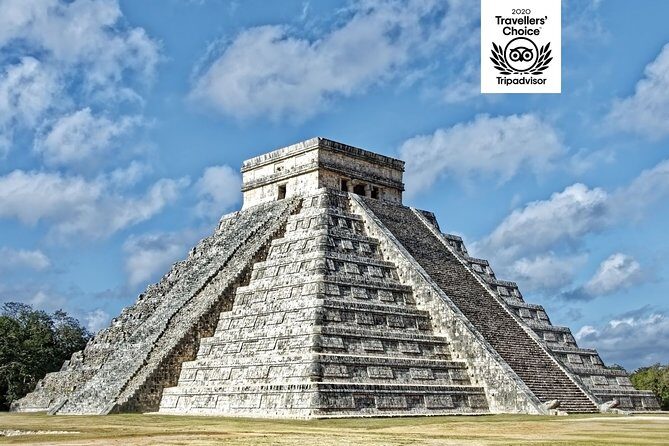
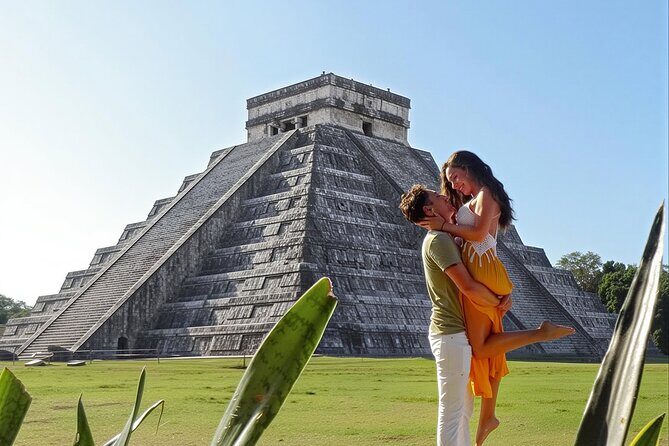
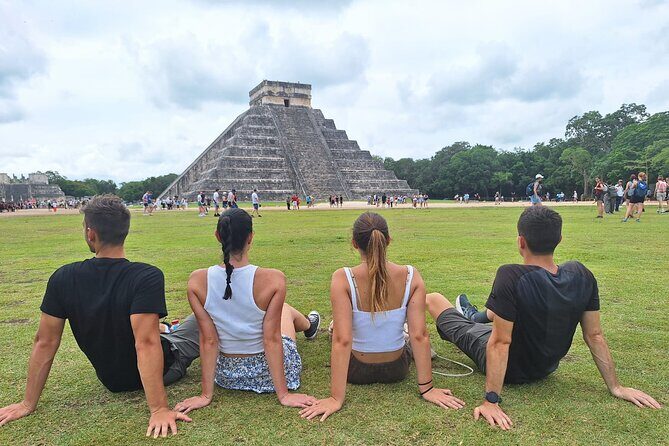
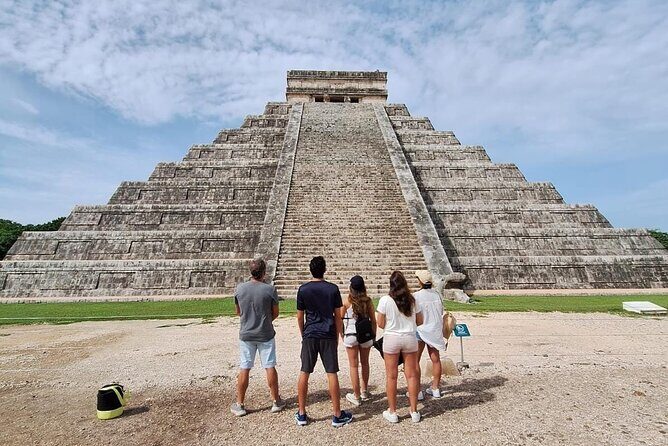
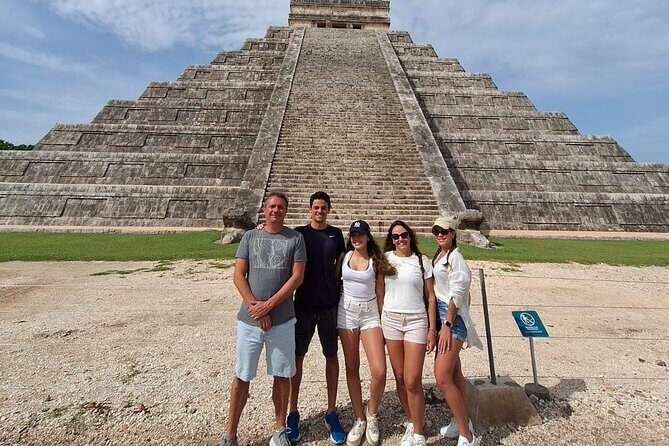
El Castillo is the main event, and this tour makes sure you actually understand why people come back year after year. You start at the main entrance area and head to the Kukulcán temple, the most emblematic, imposing structure at the site.
The guide’s focus here is not just “look at this big pyramid.” You’ll hear how its architecture connects to astronomy and how it plays into a three-dimensional calendar idea. That matters because it turns a pretty photo into something that feels designed, timed, and intentional.
Two things to watch for when you’re there:
- The guide’s explanation changes what you notice in the pyramid’s layout, especially where light and shadow create patterns.
- El Castillo’s setting and proportions help you grasp why it became one of the modern-day icons of the ancient world.
You’re allotted about 30 minutes for this stop, which is long enough for photos and questions, but short enough that you don’t bake in the sun waiting for “the perfect shot.”
Stop 2: Temple of the Warriors and the square-pillars story
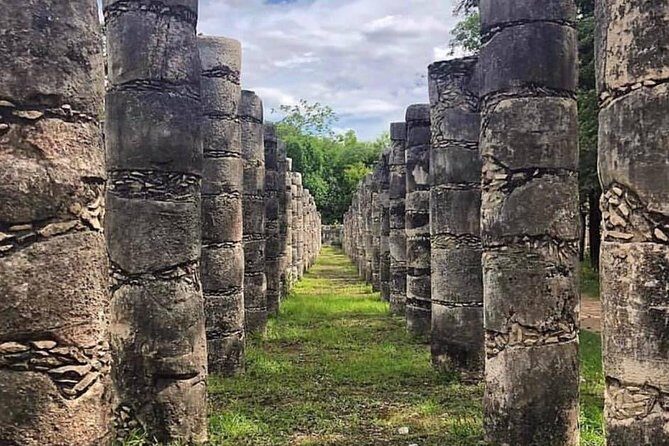
Next up is the Temple of the Warriors, and the description is accurate: those square pillars are the star. This stop is designed to shock you a bit, in the best way, because it shifts the vibe from ritual and symbolism to strength and militarized power.
The pillars have engravings of warriors, and the temple is described as associated with war and human sacrifice. That’s heavy subject matter, and the value of a guide here is context: you get the “what you’re looking at” and the “why it mattered” instead of just reading vague labels.
You get about 20 minutes at this stop. That’s enough time to circle, take photos, and get the main story without the tour dragging. If you’re the type who tends to wander off for a better angle, this is one of the places where staying with the group pays off, because the explanation connects specific features to meaning.
Stop 3: Gran Juego de Pelota and why the acoustics matter
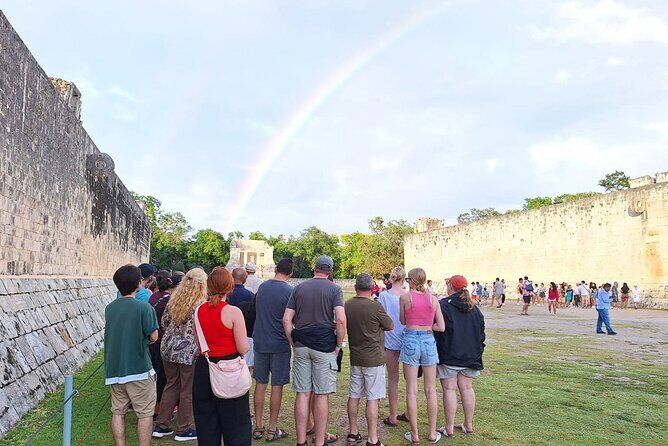
The Gran Juego de Pelota is the largest ball field in Mesoamerica, and the tour leans into what makes it special: its acoustics. Yes, it’s impressive visually. But the bigger win is that the guide frames the place as an engineered space with sound.
You’ll spend about 20 minutes here. This is the stop where you’ll likely understand why the Maya ball game gets compared to modern sports talk, even though it wasn’t just recreation. The tour’s emphasis on acoustics helps you experience the architecture as a working feature of the site.
For photography, guides often have a “stand here” logic for big structures and lines of sight. One guide named in feedback, Russell, was specifically praised for knowing the right photo spots and poses. Even if you don’t care about posing, those viewpoints make the ruin read better in your photos later.
Other guided tours in Chichen Itza
Stop 4: Sacred Cenote and the Maya world-underworld connection
The last stop is Sacred Cenote, a natural well that the Maya considered sacred. The tour describes it as a portal to the underworld, tied to religious rituals including offerings and sacrifices, and believed to be a communication link with gods of the underworld.
This stop is about 20 minutes, and that time limit matters because it keeps the emotional weight from turning into an exhausting slog. You get the meaning in a focused window, then you move on rather than waiting around while the site heats up.
If you like ruins for their spiritual and cultural meaning, this is the moment where the whole day clicks. You started with astronomical structure ideas at El Castillo, shifted through themes of power at the Temple of the Warriors, experienced a purpose-built performance space at the ball court, and end with a place described as a portal for ritual communication.
Guides who make it click: Russell, Omar, and the multimedia edge
A big part of the value here is the expert guide. Multiple guide names came up in feedback, including Russell and Omar, and the praise has a common thread: guides make the ruins feel like they have rules, not just shapes.
Russell was highlighted for enthusiasm and for answering questions with historical insight tied to Maya culture. Another repeated plus: the guide can bring extra explanation tools, including multimedia shown on a tablet. That’s not a gimmick when it’s used to support what you’re seeing in front of you.
Omar also received praise for being knowledgeable and enthusiastic, which matters in a place where the details can sound confusing if nobody connects them to the physical layout. In short, if you pick a tour like this, you’re buying translation of stone.
One more practical note: a tour booked in advance tends to reduce your need to negotiate on the spot. Some people do talk to guides near the ticket booth for similar pricing, but if you want to skip last-minute bargaining and show up with a plan, this setup is built for that.
Price and value: what you pay for, what you’ll still need to budget
The tour itself is priced at $25.26 per person and runs about 1 hour 30 minutes. In that time, you get a shared expert guide, photos during the tour, lockers, and a route that hits the four major Chichén Itzá anchors.
But the entrance fee is separate for foreign tickets: MX$696 per person. This is why I think about value in two layers:
- You’re paying for a guided, timed experience across multiple high-interest ruins.
- You still have to pay the site admission to enter Chichén Itzá.
When you do the combined pricing in your head, you’re basically buying time saved and context gained. And since the itinerary is compact, you’re not spending your day guessing your way through the site while the heat builds.
Child pricing is also worth noting. The tour includes a ticket for children under 13, which can make families feel less surprised at the gate. The tour also mentions nursing service, which is an unusual but helpful inclusion if you’re traveling with a baby.
Practical comfort at the ruins: photos, lockers, service animals, and where it ends
A few included details help this tour run smoother than a do-it-yourself day:
- Photos during the tour (not just “good luck taking pics”)
- Lockers (useful when you don’t want to carry everything around)
- Nursing service listed in the inclusions
- Service animals allowed
The tour is described as near public transportation, so it’s not completely dependent on driving.
At the end, you return back to the meeting point. That’s simple, and it helps if you’re trying to coordinate onward plans after your Chichén Itzá visit.
Parking is extra if you drive (MX$100 per booking), so plan that into your budgeting if you’re coming from farther out.
Who should book this tour, and who might want something else
This tour fits best if you:
- Want the top Chichén Itzá highlights without turning your day into a scavenger hunt
- Prefer English explanations and a guide who handles questions
- Like a tight schedule that keeps you from wasting time between ruins
- Would benefit from photo guidance and multimedia-style explanations
You might consider a different approach if you:
- Want to linger for long photo sessions and slow wandering at every single angle
- Have a very flexible plan and don’t mind doing entry-tickets logistics yourself
Should you book this Chichén Itzá expert guide tour?
Yes, if your priority is a clear, time-efficient route with an expert guiding you through the site’s meaning. The four stops are well chosen, the group size is capped at 15, and the added photo help plus lockers make it feel smoother than a barebones visit.
I’d especially lean toward booking if you care about understanding why El Castillo connects to astronomy and why the cenote is tied to ritual offerings. Just budget properly: the foreign entrance fee is separate, so your true cost is tour price plus MX$696 per person (plus parking if needed).
If your Chichén Itzá day is already packed, this is a strong way to keep it meaningful without spending half the morning figuring things out.
FAQ
How long is the Chichén Itzá tour?
It lasts about 1 hour 30 minutes (approx.).
Is the tour offered in English?
Yes, the tour is offered in English.
Where do I redeem the ticket / meet the guide?
Ticket redemption is at Guías Oficiales Chichén Itzá Certificados, Zona Arqueológica Chichen Itzá Piste, 97751 Chichén Itzá, Yuc., Mexico.
What ruins are included in the itinerary?
The tour stops at El Castillo, the Temple of the Warriors, the Gran Juego de Pelota, and Sacred Cenote.
Is the entrance fee included in the tour price?
No. The foreign entrance fee is listed as MX$696 per person, and it is not included. There is also a national ticket option with Mexican ID (INE) listed as MX$315 per booking.
How big is the group?
The tour has a maximum of 15 travelers.
What’s included besides the guide?
Included items are photos during the tour, nursing service, lockers, and a ticket for children under 13. The guide is described as shared (with a private option if selected).
Is cancellation free?
Yes. Free cancellation is offered up to 24 hours in advance for a full refund.
Are service animals allowed?
Yes, service animals are allowed.