REVIEW · MERIDA
Chichén Itzá – Izamal – Cenote
Book on GetYourGuide →Operated by Yolo Travel Designer · Bookable on GetYourGuide
Three stops, one unforgettable Yucatán day. You’ll visit Chichén Itzá for big Mayan landmarks, cool off at a sacred cenote, and finish in Izamal’s bright old-street vibe, all in a single 10-hour loop with transportation and an included buffet. I love the practicality of seeing three very different places without planning or driving, and I love that you’re guided live in Spanish or English so questions don’t have to wait. The main drawback is simple: you can end up with less time at Chichén Itzá than you’d like.
Guide quality really affects how much you take away. When guides like Alberto or David lead the day, the explanations at Chichén Itzá can make the site feel way more meaningful, not just impressive. Still, speed and language can be a factor on some days, so if you’re sensitive to fast talking, I’d keep your expectations realistic for a full schedule and mixed-language Q&A.
In This Review
- Key things I’d highlight before you go
- Chichén Itzá, Izamal, and a Sacred Cenote in 10 Hours
- Price and What the $90 Includes (and Doesn’t)
- Chichén Itzá: Make the Most of the Short Time at Kukulcán
- The Cenote Stop: Cooling Off Under the Yucatán Sky
- Izamal’s Three Cultures and the Convent of San Antonio de Padua
- Guides, Languages, and Timing: When the Day Feels Effortless
- Who Should Choose This One-Day Circuit
- Should You Book This Chichén Itzá–Izamal–Cenote Tour?
- FAQ
- What’s the duration of the Chichén Itzá – Izamal – Cenote tour?
- Where does this tour take place?
- What does the $90 per person price include?
- Are entrance fees included for Chichén Itzá and the cenote?
- What languages are available with the guide?
- Is it a guided tour or self-guided?
- Can I cancel, and is pay later available?
Key things I’d highlight before you go
- Chichén Itzá, cenote, and Izamal in one day means less hassle and more variety
- Live Spanish/English guide helps you follow what you’re seeing
- Cenote stop is the reset button when the heat and crowds start to feel like a lot
- Izamal’s three-layer story (pre-Hispanic, colonial, modern) gives context beyond Mayan ruins
- Time management matters most at Chichén Itzá since that’s where you may feel the squeeze
Chichén Itzá, Izamal, and a Sacred Cenote in 10 Hours
This is a classic Yucatán “best-of” day because it stitches together three experiences that don’t overlap much: a major Mayan archaeological site, a sacred underground water spot, and a colonial-era town with a strong living culture.
The pacing is built around the same reality most first-timers face in the region. You’ll have limited daylight and you’ll likely want to see the headline places without turning your trip into a logistics project. That’s where this tour format shines.
And yes, it’s a lot in one day. But “a lot” can be good when you’re strategic and the guide helps you connect the dots fast.
Other chichen itza & cenote tours at Chichen Itza & the Yucatán

Price and What the $90 Includes (and Doesn’t)
The price is $90 per person for a 10-hour experience. At this level, you’re paying mostly for transport, a live guide, and the included buffet meal. That’s real value if you’d otherwise have to figure out ride options, timing, and ticket logistics.
What’s not included is important to budget for: entrance fees for Chichén Itzá and the cenote, plus drinks and gratuity. So your total cost won’t just be the $90.
If you’re trying to gauge value, I suggest you think in two layers:
- If you want one guided day that covers big-picture highlights, $90 is reasonable.
- If you’re mainly price-shopping and you already have easy transportation lined up, you might be able to build a cheaper DIY plan. But you’d trade away the convenience.
Also, the tour company is Yolo Travel Designer, and you’re not buying just a route map. You’re buying the organization that keeps moving parts working together.
Chichén Itzá: Make the Most of the Short Time at Kukulcán
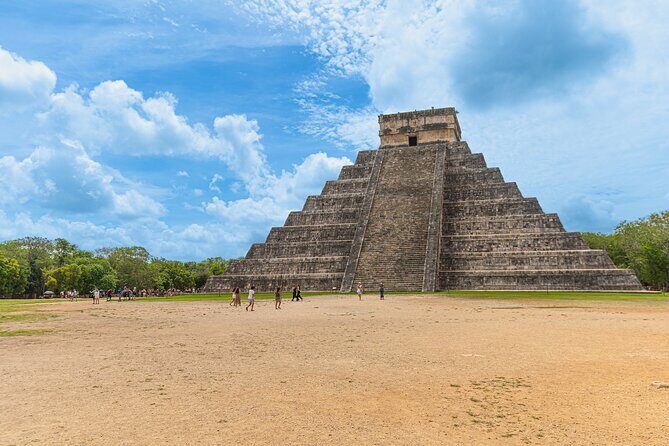
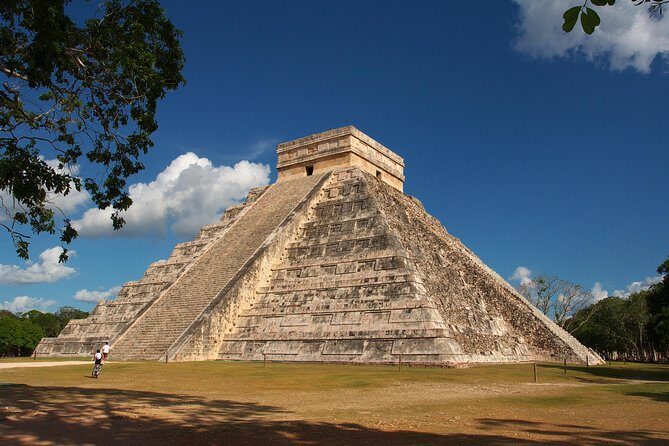
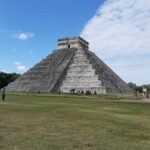
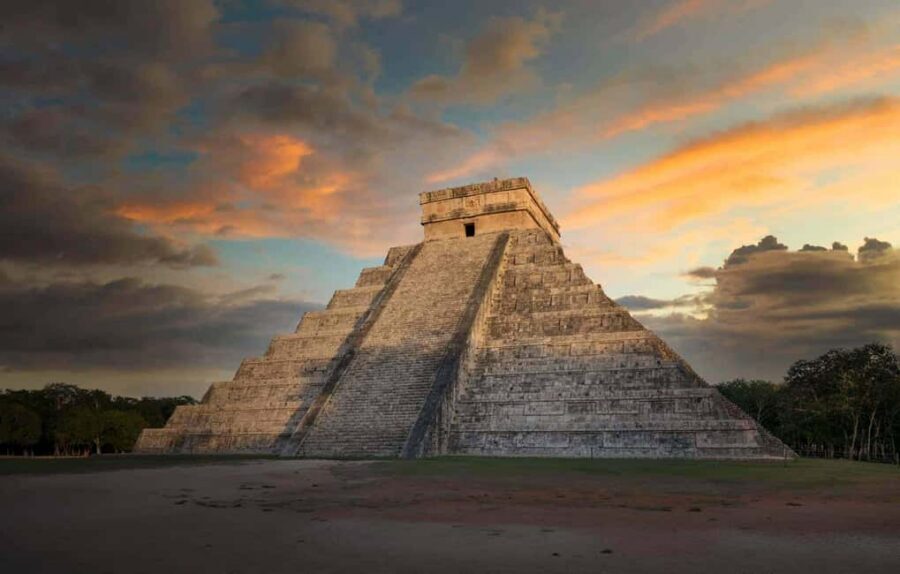
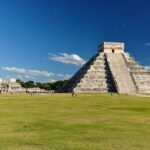
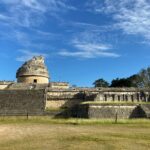
Chichén Itzá is the main event. You’ll focus on major parts of the site, including the Kukulcán pyramid, the observatory, and the ball court, plus other visible vestiges of the Maya civilization. This is exactly the sort of place where a good guide changes everything.
Here’s the trade-off I’d plan for: you may feel that the time at Chichén Itzá is tight. One clear theme from real-world experiences is that the schedule can be efficient, but not always generous. If you love lingering, sketching details, or reading everything on your own, you might wish you had more hours.
That said, a well-led short visit can still be highly satisfying if you go in with the right attitude: look for the big structures first, then use the guide’s explanations to interpret what you’re seeing. This is also where guide choice matters. On days with strong interpretation, the site feels less like random stone and more like a coordinated Maya world.
If you’re English-speaking, pay attention to how language is handled. I’ve seen examples where a guide’s bilingual delivery can work very well, and other examples where it’s harder to follow because of pace or how questions are translated. Either way, do yourself a favor: come prepared to hear a fast rhythm. You’ll get more out of the day by letting the guide set the pace.
The Cenote Stop: Cooling Off Under the Yucatán Sky
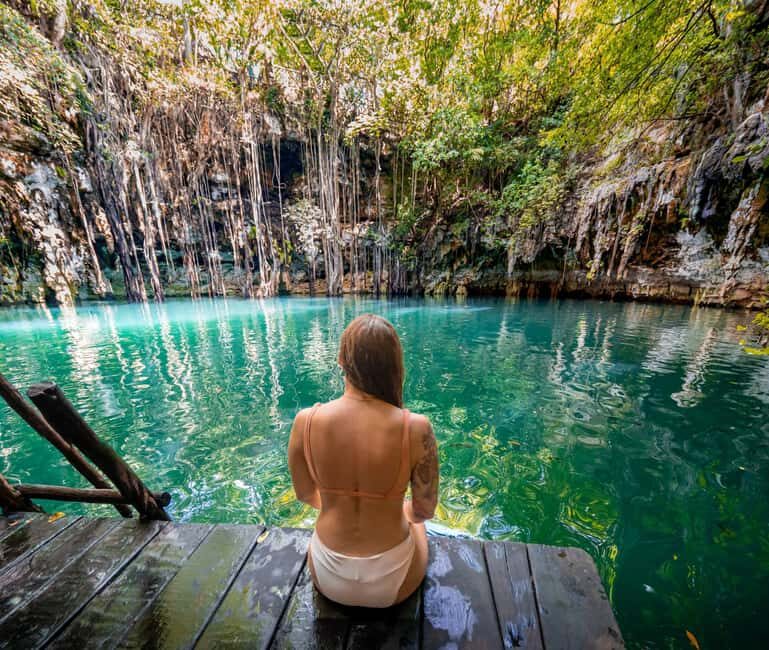
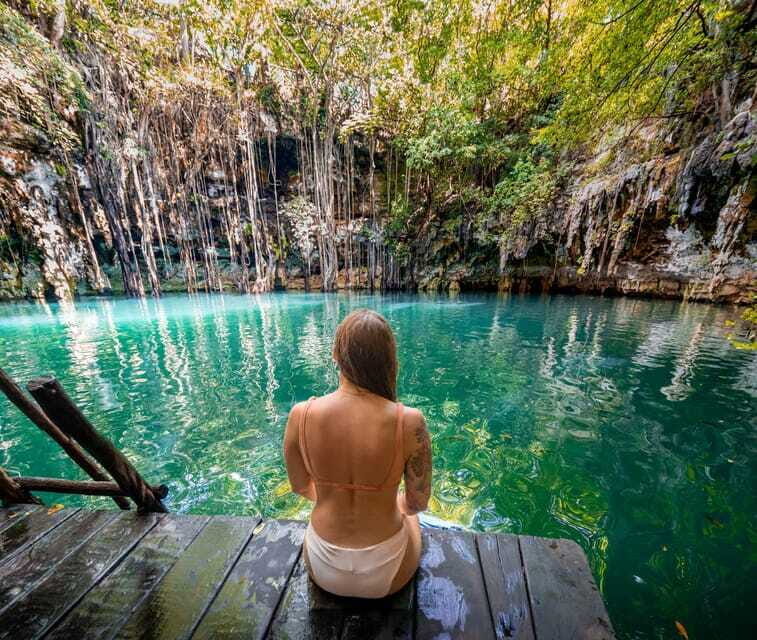
After Chichén Itzá, the day pivots to something totally different: a sacred cenote. You’ll have the chance to cool off in crystal clear underground waters, which is exactly what most people need after hours in the sun.
Why the cenote matters beyond the fact that it’s scenic: it helps you understand that the Maya world wasn’t only about monuments. Sacred water sites had cultural and spiritual importance, and this stop gives you a physical encounter with that theme. It’s the kind of moment that can reset your brain and make the archaeological stops feel more connected.
A cenote visit also adds variety to the day’s energy. Ruins make you look outward at structures. A cenote asks you to look downward and move differently. Even if you’re not a strong swimmer, the value here is the experience itself: the setting, the stillness, and that underground contrast.
Practical advice I’d follow: wear something you can handle getting wet, and keep essentials organized. You’ll be glad you planned for a water stop rather than treating it like a quick photo break.
Izamal’s Three Cultures and the Convent of San Antonio de Padua
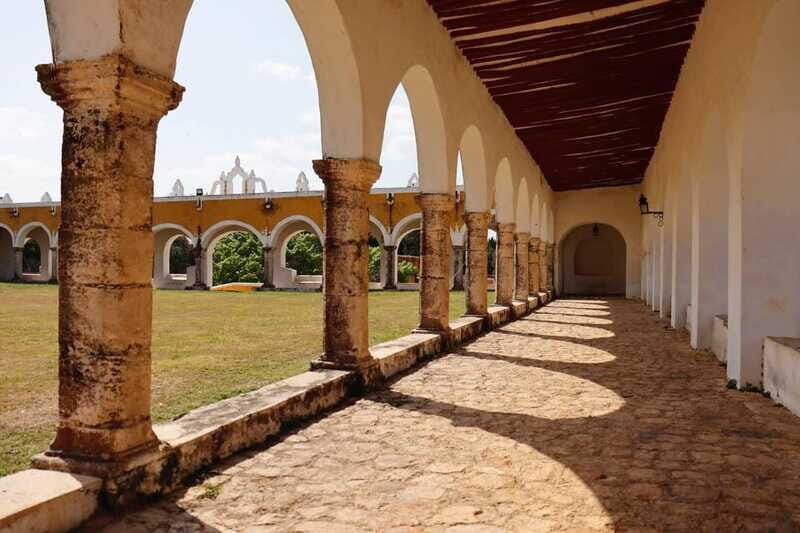
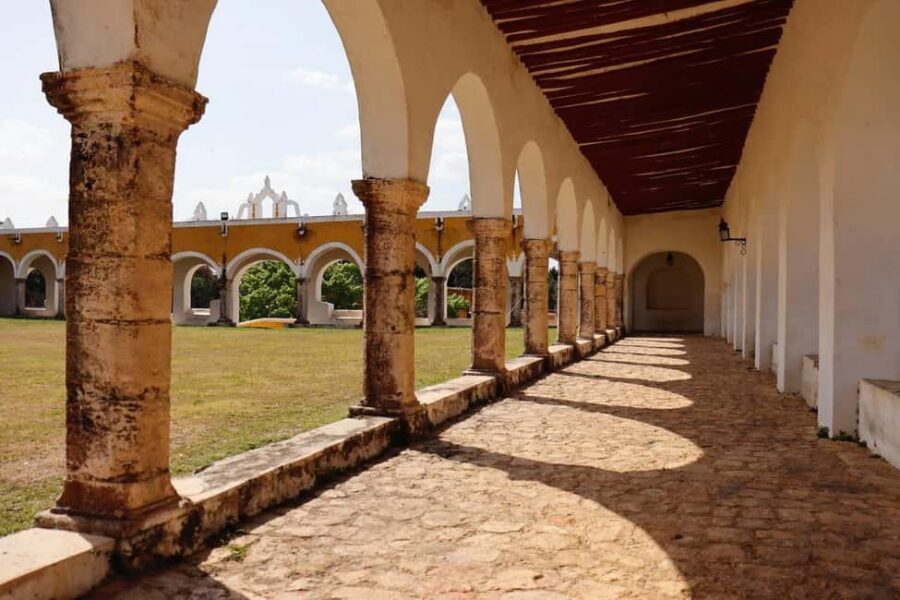
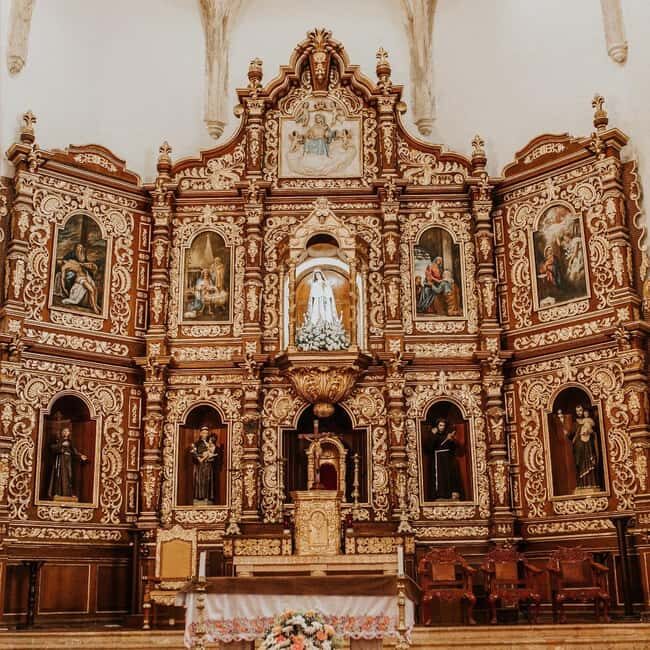
Izamal is a great closer because it shifts you from Maya stone to a living town. You’ll walk cobblestone streets and see the famous yellow facades, then visit the Convent of San Antonio de Padua, described as one of the largest in Latin America.
The big idea behind Izamal is the name you’ll hear again and again: the City of the Three Cultures. That refers to the fusion of pre-Hispanic, colonial, and contemporary layers. In a single afternoon, you start to feel how Yucatán culture isn’t “only ancient” and it’s not “only Spanish-era.” It’s both, plus what came after.
This stop also balances the day’s intensity. Chichén Itzá is structured and monumental. The cenote is sensory and cool. Izamal gives you time to slow down a bit, wander on foot, and absorb the town’s visual identity.
One note on expectations: Izamal is visually distinct, but it’s not a museum timed to your every question. The best way to enjoy it is to let it be a walk. Let the guide point out what matters, then use your own pace to enjoy the streets and the buildings.
Other chichen itza & izamal tours at Chichen Itza & the Yucatán
Guides, Languages, and Timing: When the Day Feels Effortless
This tour lives or dies by organization. The scheduling is designed to hit multiple sites in one day, which means timing has to work and transitions have to be smooth.
When it’s done well, you feel it instantly. There are strong signals from real guide experiences: guides like Alberto and David have been praised for being clear and well-prepared, with in-depth explanations that make Chichén Itzá easier to understand. In those cases, you’re not just seeing the “wow” shapes. You’re getting context that sticks.
There are also caution signs worth knowing. I’ve seen examples where a guide’s pace was very quick, or where Spanish and English were mixed in a way that made it harder for some people to follow. If everyone around you is Spanish-speaking and the guide answers only in Spanish, it can feel limiting even if the guide is trying to manage questions. In other words, bilingual tours can still lean one way depending on the group.
Then there’s the practical stuff. One guide experience included a pickup mix-up that the guide handled well by finding the group again. That’s a reminder to check where and when you’re told to meet, and to keep your phone charged. When something small goes wrong, the quality of the guide and driver matters.
For you as a visitor, my takeaway is simple: show up ready to move, and give the guide a chance to translate your day into meaning fast.
Who Should Choose This One-Day Circuit
This tour is a good fit if you want an efficient first pass at the region. If it’s your first time in Yucatán and you want Mayan civilization, the City of the Three Cultures, and a sacred cenote experience, this day covers those goals.
It’s also a solid choice if you value guided interpretation over self-guided reading. You’ll get a live guide in Spanish or English, and that tends to matter most at archaeological sites where symbols and structure are the point.
I’d consider this tour less ideal if you:
- Want lots of quiet time at Chichén Itzá for your own exploration
- Get frustrated when a day runs on a tight schedule
- Strongly prefer one language the whole time, with no switching or group-driven Q&A
If you land in the “I like variety and I don’t want to manage logistics” camp, you’ll probably enjoy it.
Should You Book This Chichén Itzá–Izamal–Cenote Tour?
Here’s my honest decision guide: I think this is worth booking if you’re okay with a packed schedule and you budget for entrance fees on top of the $90 price. The value comes from the way the day combines headline sights into one organized circuit, plus an included buffet meal and live guidance in Spanish/English.
I’d book it with confidence if you’re the type who likes a guided “starter kit” for a destination. Chichén Itzá is huge and can feel abstract without explanation, and the cenote and Izamal stops give you contrast so the day doesn’t blur into one long ruin visit.
If you hate rushing or you’re the type who wants hours at one place, you might feel the time pressure at Chichén Itzá. In that case, you could consider extending your trip or planning a slower visit on another day.
One more helpful point: the tour offers free cancellation up to 24 hours in advance and reserve now & pay later, so you can line it up without feeling locked in too early.
FAQ
What’s the duration of the Chichén Itzá – Izamal – Cenote tour?
The tour lasts 10 hours.
Where does this tour take place?
It takes place in the Yucatán Peninsula, Mexico.
What does the $90 per person price include?
Transportation, a live guide, and a buffet food stop are included. Entrance fees, drinks, and gratuity are not included.
Are entrance fees included for Chichén Itzá and the cenote?
No. Entrance fees for Chichén Itzá and the cenote are not included.
What languages are available with the guide?
The live tour guide is available in Spanish and English.
Is it a guided tour or self-guided?
It’s a live tour with a guide.
Can I cancel, and is pay later available?
Yes. You can cancel up to 24 hours in advance for a full refund, and you can reserve now & pay later.
If you’d like, tell me your travel month and whether you prefer Spanish or English, and I’ll help you decide how to time this day and what to prioritize.